How to Encourage and Amplify it in Your School
By Kristian Raspa
Student voice is the active and meaningful participation of students in the decisions that affect their learning and well-being. Research has shown that when students have a voice in their education, they have better academic outcomes, increased engagement, and a greater sense of ownership and responsibility for their learning. However, fostering student voice in education can be challenging for educators. Here is an overview of the importance of student voice in education and some suggestions on how to encourage and amplify it in your school.
The Importance of Student Voice
Student voice allows students to take an active role in their learning and to have a say in the decisions that affect their education. Research has shown that when students have a voice in their education, they are more motivated and engaged in learning (Henderson & Mapp, 2002). Additionally, when students have a voice in the decisions that affect their learning, they develop important life skills such as critical thinking, problem-solving, and decision-making.
Encourage Student Voice in the Classroom
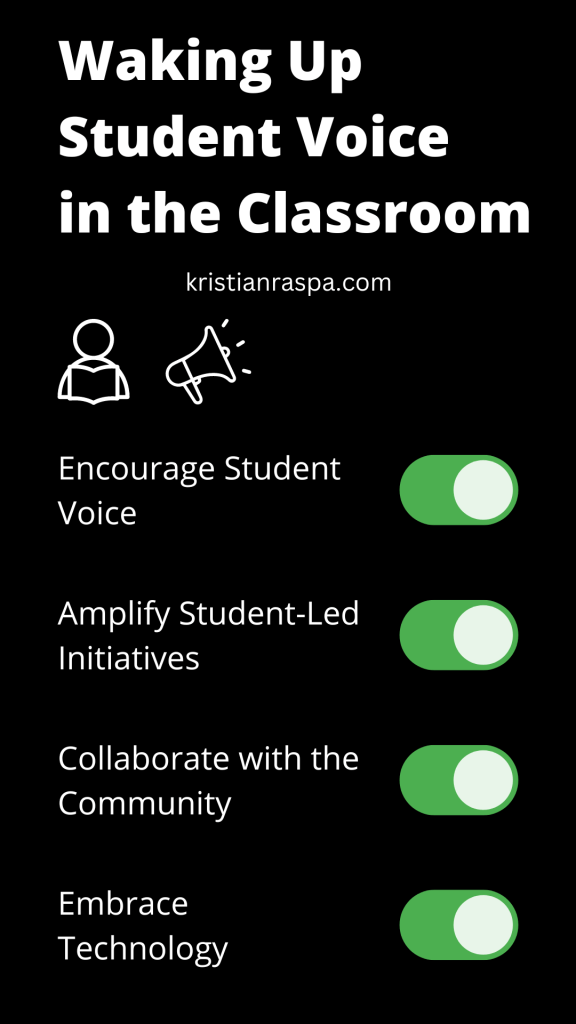
One of the most effective ways to encourage student voice in education is to create opportunities for students to participate in the classroom. This can be done by giving students a choice in their learning, such as allowing them to choose a topic to research or a project to complete. Additionally, teachers can encourage students to share their ideas, opinions and feedback in class discussions, and in the decision-making process of the class.
Amplify Student Voice through Student-led initiatives
Giving students opportunities to lead initiatives and projects within the school can be an effective way to amplify student voice. This can include student-led clubs, student government, and peer mentoring programs. Through these initiatives, students have the opportunity to take on leadership roles and make decisions that affect the school community.
Collaborate with Families and Community
To amplify student voice, it is essential to involve families and community members in the process. Teachers can encourage families to participate in school events, and get involved in decision-making processes that affect the school. Additionally, they can collaborate with local organisations, businesses and community groups to create opportunities for students to participate in community service projects and other activities that allow them to engage in civic-minded activities.
Embrace Technology
Technology can be used to amplify student voice by providing students with opportunities to participate in online discussions, create digital portfolios, and publish their work online. Additionally, technology can be used to create virtual student councils and other platforms that allow students to express their opinions and ideas.
Student voice allows students to take an active role in their learning, and to have a say in the decisions that affect their education. To encourage and amplify student voice, educators can create opportunities for students to participate in the classroom, amplify student voice through student-led initiatives, collaborate with families and community, and embrace technology.
References:
- Henderson, A. T., & Mapp, K. L. (2002). A new wave of evidence: The impact of school, family, and community connections on student achievement. Austin, TX: Southwest Educational Development Laboratory.
- Comer, J. P. (1988). The role of the school in the development of the child. Journal of Social Issues, 44(3), 57–66.
 Kristian Raspa
Leave a comment