As educators, we all know the importance of creating a positive and engaging learning environment for our students. But what many of us may not realize is the powerful impact that community engagement can have on student success.
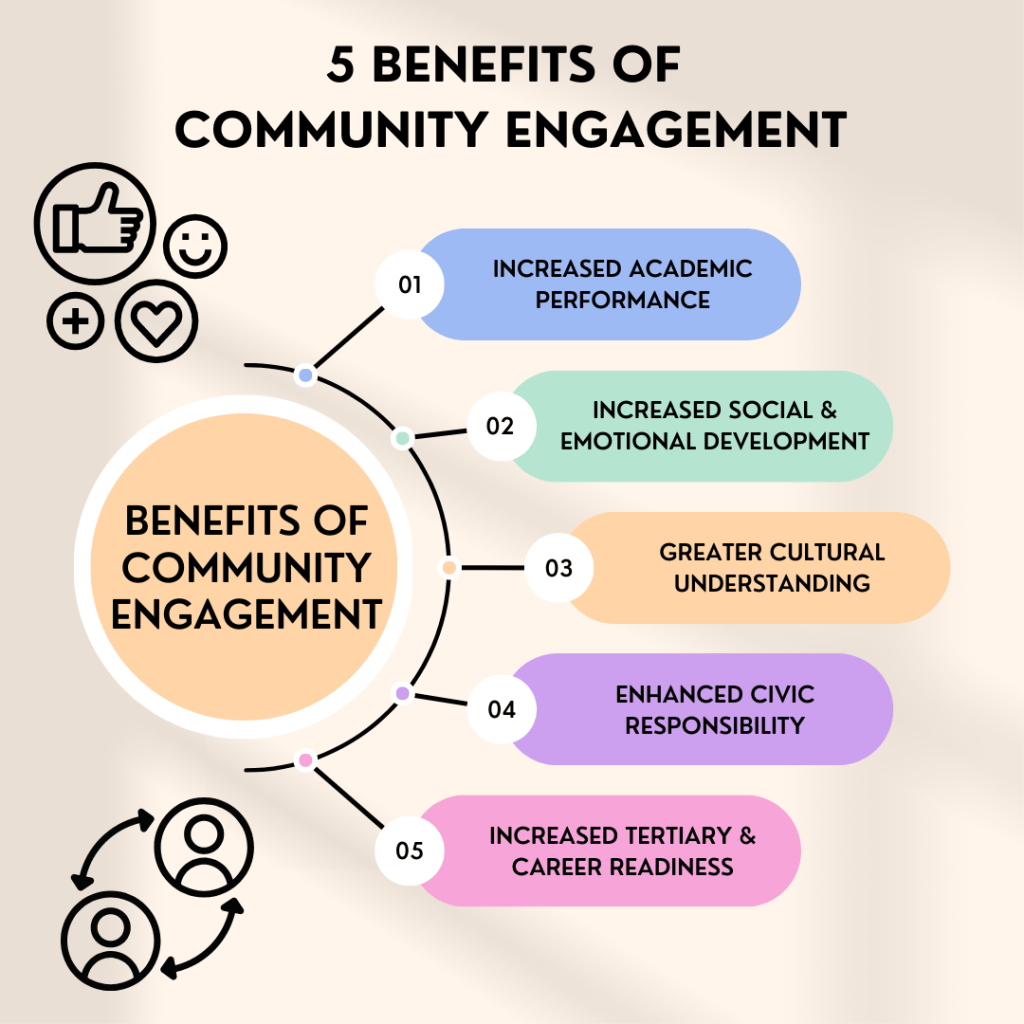
Studies have shown that students who are more engaged in their communities have better academic outcomes, including higher graduation rates and test scores (Eccles & Gootman, 2002). This is because community engagement provides students with real-world experiences and opportunities to apply what they are learning in the classroom. It also helps students develop important skills such as critical thinking, problem-solving, and teamwork.
In addition to improving academic performance, community engagement also has a positive impact on students’ social-emotional development. It can help students develop important social and emotional skills, such as empathy, self-esteem, and a sense of belonging (Jekielek, 2002). It also exposes students to different cultures and perspectives, helping them to become more tolerant and understanding of diversity (Gay, 2000).
Community engagement also plays a vital role in shaping students into responsible citizens. It helps students develop a sense of civic responsibility, encouraging them to become active members of society (McMillan & Chavis, 1986).
Community engagement is an excellent way to prepare students for tertiary studies and the workforce. It can help students identify and explore their interests, skills, and aspirations, and prepare them for post-secondary education and the workforce (Kendall, 2002).
Community engagement is an essential component of a well-rounded education. It is a powerful tool for improving academic performance, social-emotional development, civic responsibility, and university and career readiness. It is high time that schools invest in community engagement programs and opportunities for their students.
References:
- Eccles, J.S., & Gootman, J.A. (2002). Community Programs to Promote Youth Development. National Academy Press.
- Jekielek, S. (2002). Community Service and Social Responsibility in Youth. Sage Publications.
- Gay, G. (2000). Culturally Responsive Teaching: Theory, Research, and Practice. Teachers College Press.
- McMillan, J.H., & Chavis, D.M. (1986). Sense of community: A definition and theory. Journal of Community Psychology, 14(1), 6-23.
- Kendall, J. (2002). Preparing for Life: The Role of Community Service in Teens’ Lives. Harvard Educational Review.
 Kristian Raspa
Leave a comment